





“GUIDED TREATMENT MODALITIES IN IMPLANT PLACEMENT”
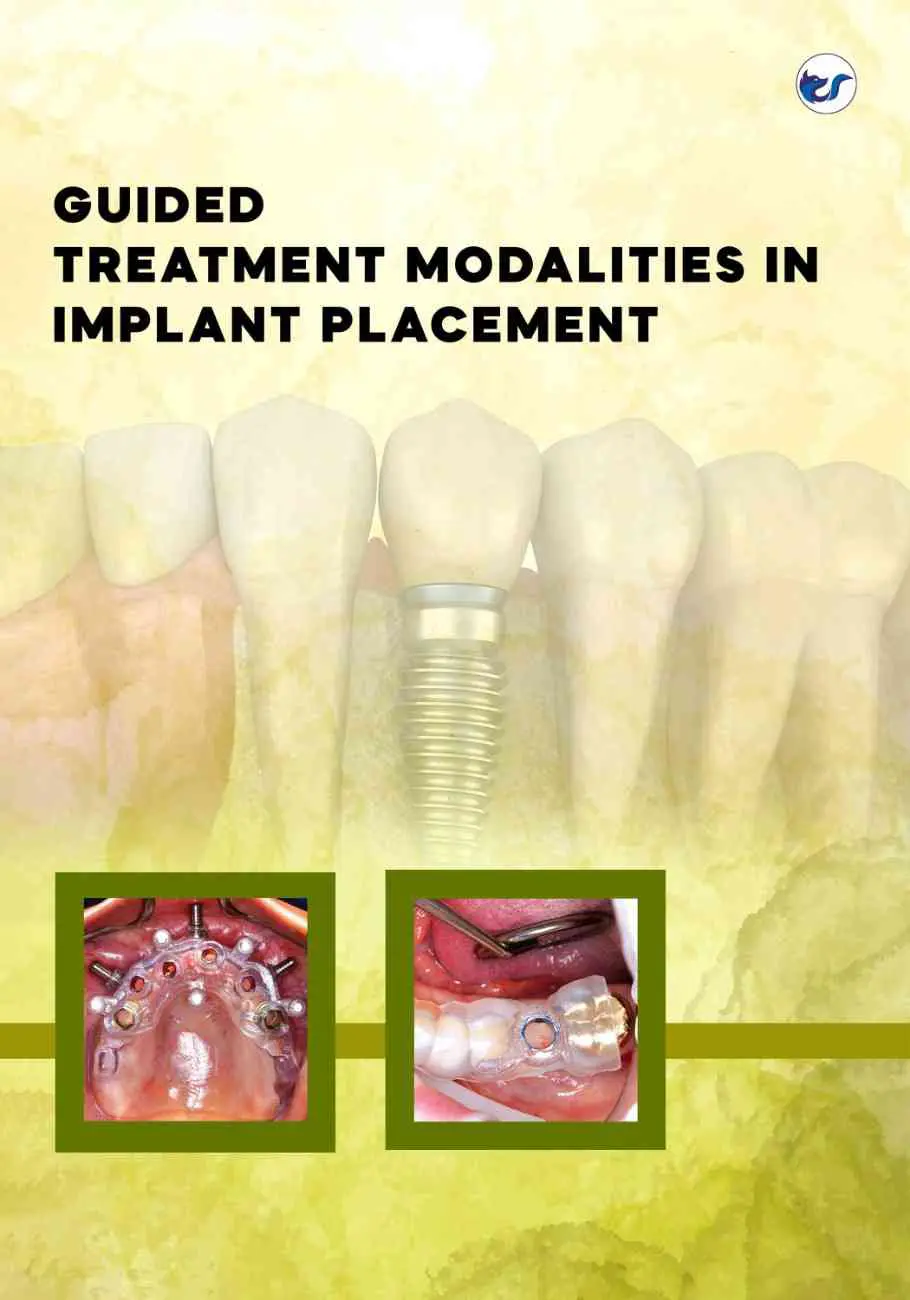
This book presents a detailed and structured exploration of the evolution of implant dentistry, focusing on both conventional and technology assisted approaches to implant placement. It systematically analyzes freehand, flapless, static guided, dynamic navigation, and robot-assisted surgical techniques, highlighting their respective clinical protocols, accuracy, advantages, and limitations.
Beginning with the fundamental principles of implant placement, the text advances through the development of static and dynamic guidance systems, emphasizing their precision, reproducibility, and influence on long-term treatment outcomes. Comprehensive sections address zygomatic, pterygoid, and sinus lift procedures, integrating evidence-based insights on guide design, support types (mucosa-, bone-, and tooth-supported), and innovations such as metal sleeves and 3D-printed surgical templates.
The work critically reviews literature on implant survival, success rates, and accuracy metrics, presenting comparative evaluations between digital and traditional workflows. It further discusses essential aspects such as imaging modalities, intraoral scanner precision, and guide planning software, offering clarity on the digital integration process in modern implantology.
Special emphasis is placed on clinical challenges, including cost, inventory, operator experience, errors, and complications associated with guided surgery. Additional chapters examine heat generation during osteotomy, drilling protocols, and immediate loading concepts under guided conditions. The inclusion of robot-assisted and navigation-guided approaches reflects the growing shift toward automation and enhanced surgical control.
Designed as both a reference and analytical review, this compilation serves postgraduate students, clinicians, and researchers seeking to understand the scientific foundations, clinical implications, and future prospects of guided implant surgery. By combining theoretical knowledge with practical considerations, the book provides a balanced perspective on precision-driven implantology one that underscores the importance of digital planning, surgical accuracy, and predictable patient outcomes.











Reviews
There are no reviews yet.