

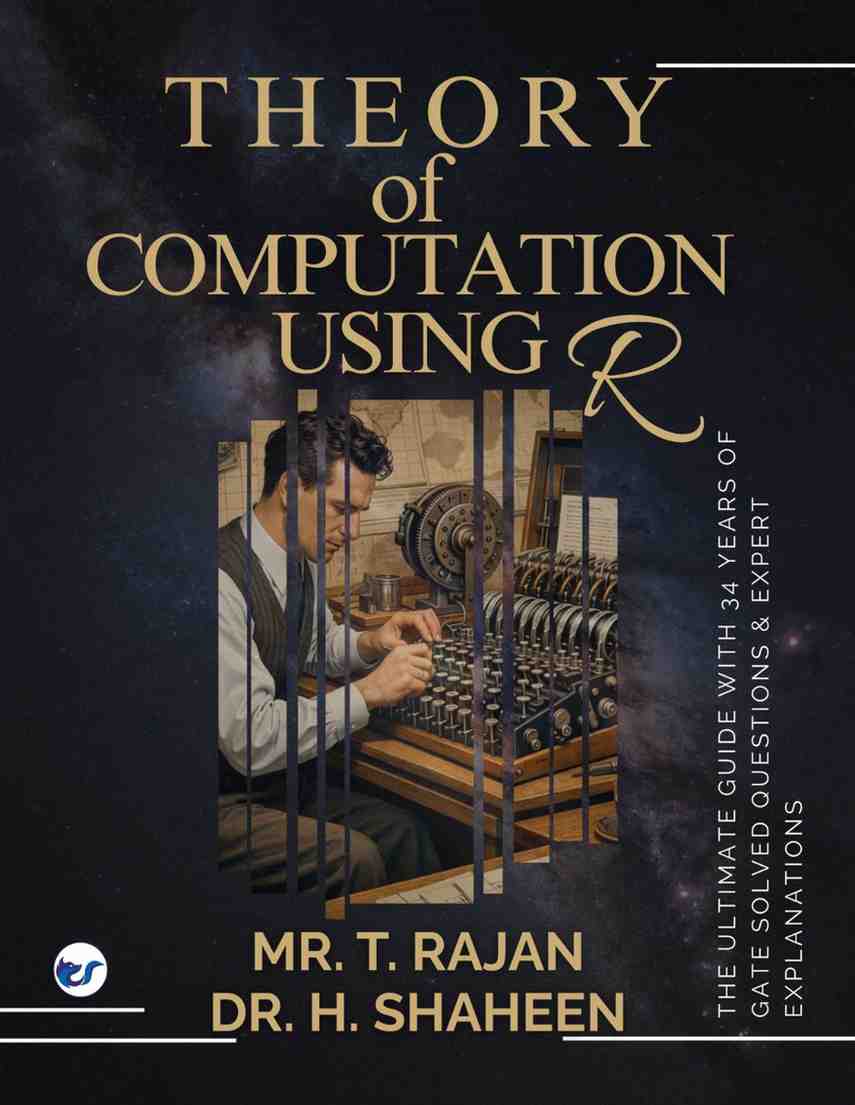




Theory of Computation with R: Formal Languages, Automata, and Computability with R is a comprehensive and practical introduction to the foundations of theoretical computer science using the R programming language as a tool for exploration and implementation. This book is designed for undergraduate students, self-learners, and practitioners who want to understand the core principles that define what computers can and cannot compute — and to experiment with these ideas using real code.
The book begins with a solid grounding in formal languages and grammars, explaining how abstract languages are defined and classified and how they are generated. From there, it progresses through the major models of computation — including finite automata, pushdown automata, and Turing machines — illustrating how each model corresponds to a class of languages and exploring their theoretical properties and limits.
Stucor
Throughout the text, readers will find:
Clear Definitions and Theory — Rigorous yet accessible explanations of fundamental concepts in formal language theory, automata, and computability.
Hands-On R Examples — Code snippets and exercises that show how to model and simulate key computational devices in R, helping you visualize and experiment with abstract ideas.
Formal Proofs and Intuition — Step-by-step arguments that build intuition for why languages behave the way they do and how computational limits arise.
Computability and Decidability — Coverage of what problems can be solved algorithmically, what problems are undecidable, and how these limits are established using abstract machines.
Practical Applications — Connections to compiler design, parsing, and language recognition that link theory to real systems in computing.
Routledge
By blending traditional theory of computation topics — such as the Chomsky hierarchy, closure properties, nondeterminism, and the limits of computation — with interactive R code and examples, this book offers a modern and engaging pathway into one of computer science’s most fundamental subjects. It bridges the gap between abstract mathematical reasoning and practical coding experience, helping readers see the power and limits of computation in a more intuitive and applied way.
 No products in the cart.

![பாதங்களை பாதுகாப்போம்[paadhangalai paadhukaappom]: கால் பிரச்சனைகளை தடுக்ககூடிய வழிகாட்டி[kaal pirachanaiygalai thadukka koodiya vazhikaatti]](https://www.ziffybees.com/wp-content/smush-webp/2026/06/PaadhangalaiPaadhukaappom1-320x495.jpg.webp)




Reviews
There are no reviews yet.